Note Frequency Calculator
 Created by Kaushik RabadiyaLast updated: October 27, 2024
Note frequency instantly calculates results using decimal places, frequency, note name. Use the calculator above for instant answers in your browser.
Key takeaway: Choose the name of a musical note and the note frequency calculator will output its frequency. This free Note Frequency Calculator is designed for students, professionals, and curious minds — enter your values above to get instant results.
This note frequency calculator is a convenient tool to determine the frequency of musical notes tuned in the twelve-tone equal temperament. In the text, you'll find the note frequency chart and a guide on how to use the note frequency converter.
We'll also cover the basics of the physics of sound — if you want to learn more about it, check out our relevant calculators:
The frequency of musical notes
Sound is a wave which travels through a medium, such as air or water. All sounds consist of sine waves with different frequencies and amplitudes. Amplitude determines volume, and frequency determines pitch.
Technically, frequency is the number of completed wave cycles per second, and is expressed in Hertz. For example the frequency of the musical note C4 is approximately 262 Hz. This means the sound wave has 262 cycles per second.
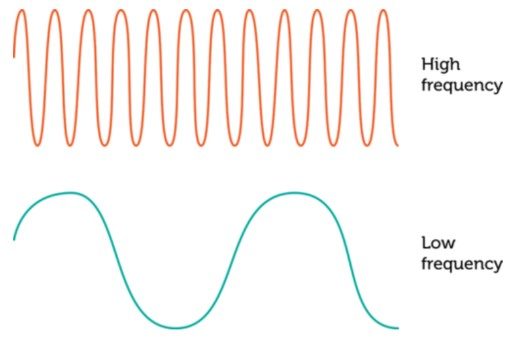
Musical notes have determined frequencies. For example, in the twelve-tone equal temperament (the most common tuning system since the 18th century), note A4 has a frequency of 440 Hz.
If one note is double the frequency of another, they sound similar, so we designate them with the same letter. We then add a number to represent the octave - that is to say whether we mean a higher or lower D.
This way of representing musical notes if called the scientific pitch notation.
If you'd like to know how to go from a musical note in hertz to semitones, you can use the semitone calculator. And if you want to learn the basics of harmony, head to our harmonic series calculator!
How to use the note frequency calculator
-
Choose the name of the note. Note pairs like F♯ and G♭, or C♯ and D♭, are enharmonic equivalents, which means they denote the same sound.
-
Choose an octave.
-
By default, the calculator rounds the frequency of the musical note to two decimal places, but you can increase the precision.
The note frequency chart
Below you can see a table with the rounded frequencies of musical notes in Hertz:
| Octave / Note | 0 | 1 | 2 | 3 | 4 | 5 | 6 | 7 | 8 |
|---|---|---|---|---|---|---|---|---|---|
| C | 16 | 33 | 65 | 131 | 262 | 523 | 1047 | 2093 | 4186 |
| C♯ | 17 | 35 | 69 | 139 | 277 | 554 | 1109 | 2217 | 4435 |
| D | 18 | 37 | 73 | 147 | 294 | 587 | 1175 | 2349 | 4699 |
| D♯ | 19 | 39 | 78 | 156 | 311 | 622 | 1245 | 2489 | 4978 |
| E | 21 | 41 | 82 | 165 | 330 | 659 | 1319 | 2637 | 5274 |
| F | 22 | 44 | 87 | 175 | 349 | 698 | 1397 | 2794 | 5588 |
| F♯ | 23 | 46 | 93 | 185 | 370 | 740 | 1480 | 2960 | 5920 |
| G | 25 | 49 | 98 | 196 | 392 | 784 | 1568 | 3136 | 6272 |
| G♯ | 26 | 52 | 104 | 208 | 415 | 831 | 1661 | 3322 | 6645 |
| A | 28 | 55 | 110 | 220 | 440 | 880 | 1760 | 3520 | 7040 |
| A♯ | 29 | 58 | 117 | 233 | 466 | 932 | 1865 | 3729 | 7459 |
| B | 31 | 62 | 123 | 247 | 494 | 988 | 1976 | 3951 | 7902 |
FAQs
What does the Note Frequency Calculator do?
Choose the name of a musical note and the note frequency calculator will output its frequency. Use the calculator above for instant results in your browser.
Is the Note Frequency Calculator free to use?
Yes. All Try To Calculator tools are free and do not require an account.
Are my inputs stored or sent to a server?
No. Calculations run locally in your browser. We do not collect the numbers you enter or the results shown.
Can I use the Note Frequency Calculator for professional decisions?
This tool is for education and quick estimates. For medical, legal, tax, or financial decisions, verify results with a qualified professional.
Where can I find related calculators?
Browse more Other tools on Try To Calculator at /other, or use the related calculators section on this page.
Formula verified against Peer-reviewed references — all calculations use deterministic, standards-based formulas.
Related calculators
Test grade
Instantly calculate test grade using gradepb, increment, limit a. Free, accurate other calculator with real-world examples.
Other
Download time
Instantly calculate download time using downloadspeed, downloadtime, filesize. Free, accurate other calculator with real-world examples.
Other
Minecraft stack
Instantly calculate minecraft stack using calculator mode, input items, input leftover items. Free, accurate other calculator with real-world examples.
Other
Minecraft circle
Instantly calculate minecraft circle using size, thickness, thicknessminus1. Free, accurate other calculator with real-world examples.
Other
Music interval
Instantly calculate music interval using advanced, interval notes, interval type. Free, accurate other calculator with real-world examples.
Other