
ml to Grams Calculator
 Created by Kaushik RabadiyaLast updated: May 25, 2026
ml to grams instantly calculates results using density, density flour, density nuts. Use the calculator above for instant answers in your browser.
Key takeaway: Effortlessly convert between milliliters (ml) and grams (g) with our ml to Grams Calculator. Simplify your conversions from grams to ml and vice versa. This free ml to Grams Calculator is designed for home cooks, nutrition-conscious individuals, and food professionals — enter your values above to get instant results.
With our ml to grams calculator, cooking measurement conversions are a piece of cake!🍰 Choose the ingredient, type the value in ml or grams, and the calculator will do the rest. If you're wondering if grams are equal to ml or how to convert ml to grams, don't worry too much — we've got you covered.
Read on, and you'll be able to convert water ml to grams in a flash! You'll also learn how to perform conversions from ml to grams in chemistry or medicine.
Are grams equal to ml? ml to grams for water 🌊
Well, grams are equal to ml only if the density of the product is equal to 1 gram/cm³ (= 1 kg/l = 1000 kg/m³ = 62.428 lb/cu ft; check this value in other units with our density converter). That's the case when we have water at 4 °C / 39.2 °F:
1 gram = 1 ml (water at 4 °C / 39.2 °F)
Even if the water's temperature is a bit higher – like room temperature (20-25 °C or 68-77 °F) — we can still say that 1 gram equals approximately 1 ml. Have a look at the graph to check how the density of water (and ice) changes with the temperature:
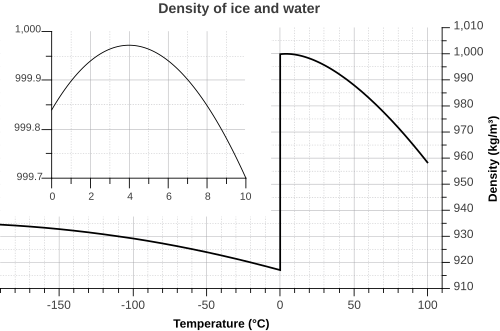
Water, where life came from, is a molecule with unusual properties. For example, thanks to the fact that the density of ice is much smaller than water density, the fish 🐟 in lakes don't freeze in wintertime: the heaviest water at about 4 °C (39 °F) sinks to the bottom. So the temperature close to the bed may be almost the same in winter and summer if the water reservoir is deep enough. This is theorized to have been important when life was first developing and needed to survive somewhere where a change in global temperature would not affect them, like at the bottom of the ocean.
How to convert ml to grams
Milliliters are the unit of volume, and grams are the unit of weight, so ml to grams conversion is not a direct calculation like "multiplying or dividing by a constant". First, you need to know the density of the object, and then you can use the transformed density formula:
-
volume [ml] = weight [g] / density [g/ml]or:
-
weight [g] = volume [ml] × density [g/ml]
In our ml to grams calculator, we've implemented many popular cooking ingredients densities. However, it's still possible that you won't find the one you need, as there are thousands of different products, liquids, and chemicals you may want to convert. What can you do in such a case?
-
Find the density of the product for which you want to make a conversion. The easiest way is to type the name of the product and "density" into the search engine of your choice – you'll most likely find it this way.
-
Come back to our ml to grams calculator and, within the list of ingredients, select
Custom ingredient— you'll be able to edit the density. Type the product density and the other value you know. -
There you go! Now, you can convert ml to grams and grams to milliliters for your product.
Conversions from ml to grams in chemistry and medicine
Now that you know how to convert ml to grams, let's have a look at different applications of ml to grams conversions:
-
In medicine, such conversions are usually connected with finding the appropriate paracetamol dose per kg of your weight. Liquid medicine concentration is often shown in mg/mL. Choose the proper unit, and you can still use this ml to grams calculator!
-
ml to grams in chemistry: all you need to do, again, is to find the density of your compound or element. Below we present the table with 50 known liquids:
| Liquid | Temperature | Density [kg/m³] |
|---|---|---|
| Acetic Acid | 25 °C / 77 °F | 1049 |
| Acetone | 25 °C / 77 °F | 784.6 |
| Alcohol, ethyl (ethanol) | 25 °C / 77 °F | 785.1 |
| Alcohol, methyl (methanol) | 25 °C / 77 °F | 786.5 |
| Alcohol, propyl | 25 °C / 77 °F | 800 |
| Ammonia (aqua) | 25 °C / 77 °F | 823.5 |
| Aniline | 25 °C / 77 °F | 1019 |
| Benzene | 25 °C / 77 °F | 873.8 |
| Butyric Acid | 20 °C / 68 °F | 959 |
| Butane | 25 °C / 77 °F | 599 |
| Caproic acid | 25 °C / 77 °F | 921 |
| Carbolic acid (phenol) | 15 °C / 59 °F | 956 |
| Carbon disulfide | 25 °C / 77 °F | 1261 |
| Carbon tetrachloride | 25 °C / 77 °F | 1584 |
| Chloroform | 20 °C / 68 °F | 1489 |
| Chloroform | 25 °C / 77 °F | 1465 |
| Citric acid, 50% aqueous solution | 15 °C / 59 °F | 1220 |
| Cyclohexane | 20 °C / 68 °F | 779 |
| Cyclopentane | 20 °C / 68 °F | 745 |
| Decane | 25 °C / 77 °F | 726.3 |
| Dichloromethane | 20 °C / 68 °F | 1326 |
| Diethylene glycol | 15 °C / 59 °F | 1120 |
| Ethane | -89 °C / -128 °F | 570 |
| Ether | 25 °C / 77 °F | 713.5 |
| Ethylamine | 16 °C / 60.8 °F | 681 |
| Ethyl Acetate | 20 °C / 68 °F | 901 |
| Formaldehyde | 45 °C / 113 °F | 812 |
| Formic acid 10% concentration | 20 °C / 68 °F | 1025 |
| Formic acid 80% concentration | 20 °C / 68 °F | 1221 |
| Fuel oil | 15.5 °C / 60 °F | 890 |
| Glycerine | 25 °C / 77 °F | 1259 |
| Glycerol | 25 °C / 77 °F | 1126 |
| Heptane | 25 °C / 77 °F | 679.5 |
| Hexane | 25 °C / 77 °F | 654.8 |
| Hydrazine | 25 °C / 77 °F | 795 |
| Isobutyl Alcohol | 20 °C / 68 °F | 802 |
| Iso-Octane | 20 °C / 68 °F | 692 |
| Isopropyl Alcohol | 20 °C / 68 °F | 785 |
| Napthalene | 25 °C / 77 °F | 820 |
| Nitric acid | 0 °C / 32 °F | 1560 |
| Palmitic Acid | 25 °C / 77 °F | 851 |
| Phenol (carbolic acid) | 25 °C / 77 °F | 1072 |
| Phosgene | 0 °C / 32 °F | 1378 |
| Propanol | 25 °C / 77 °F | 804 |
| Propylene | 25 °C / 77 °F | 514.4 |
| Silane | 25 °C / 77 °F | 718 |
| Silicone oil | 25 °C / 77 °F | 965-980 |
| Sodium Hydroxide (caustic soda) | 15 °C / 59 °F | 1250 |
| Toluene | 20 °C / 68 °F | 867 |
| Turpentine | 25 °C / 77 °F | 868.2 |
Now that you have worked out the weight or volume of your compound improve your experiments by using our molarity calculator or our mole calculator.
FAQs
How can I convert mL to grams?
To convert one milliliter of substance to grams, we start with the equation for density: Density = Mass / Volume Since density is measured as grams/L and we are interested in converting volume to mass, we need to rewrite the equation. Mass = Density × Volume Therefore, in order to convert mL to grams, you just need to multiply the volume of the substance in liters with its density (in grams/L) to get the mass in grams.
How can I convert grams to mL?
To convert grams to mL, remember that grams are a weight unit and milliliters are a volume unit. This implies you'll need to know the density of the substance (preferably in g/ml to avoid having to convert first). Divide your mass (in grams) by the density (in g/mL) to convert grams to mL.
How is gram related to mL?
When converting grams to mL, remember that a gram is a weight unit, and a milliliter is a volume unit. This means you'll need to know the substance's density (ideally in g/ml, so you don't have to convert first). To convert grams to mL, divide the weight (in grams) by the density (in g/mL).
Is 1 mL equal to 1 gram?
When it comes to pure water, 1 mL equals 1 gram because the density of water is 1 g/mL. Different liquids have different densities, and you need to multiply the volume by the density to measure the liquid's mass in grams.
Formula verified against USDA FoodData Central — all calculations use deterministic, standards-based formulas.
Related calculators
Grams to cups
Instantly calculate grams to cups using cups, density, ingredient. Free, accurate food calculator with real-world examples.
Food
Chilled drink
Instantly calculate chilled drink using alcohol content, ambient temperature, ambient temperature vs. Free, accurate food calculator with real-world examples.
Food
Pizza size
Instantly calculate pizza size using abs diff, area, area 2. Free, accurate food calculator with real-world examples.
Food
Taco bar
Instantly calculate taco bar using beans, beans1, beef. Free, accurate food calculator with real-world examples.
Food
Pizza comparison
Instantly calculate pizza comparison using area percent, no pizza1, no pizza2. Free, accurate food calculator with real-world examples.
Food